Shirodhara Treatment in Ayurveda: Benefits, Process and What to Expect
October 31, 2026
Modern life leaves little room for stillness. Demanding schedules, constant digital stimulation, emotional pressure and irregular sleep make it difficult to slow down and reconnect with yourself. Finding time to rest has become an important part of maintaining everyday well-being. For thousands of years, Ayurveda has used traditional therapies designed to encourage deep relaxation. One of the most recognised is **Shirodhara**, a soothing ritual in which warm oil flows in a gentle, continuous stream over the forehead. At Ayurdi Ayurveda, Shirodhara forms part of a broader approach to personalised Ayurvedic care, where traditional therapies, mindful routines and a peaceful coastal environment come together to create space for rest and reconnection. This guide explains what Shirodhara is, what it may help with, how a session unfolds and what to expect before you book.
What Is Shirodhara in Ayurveda?
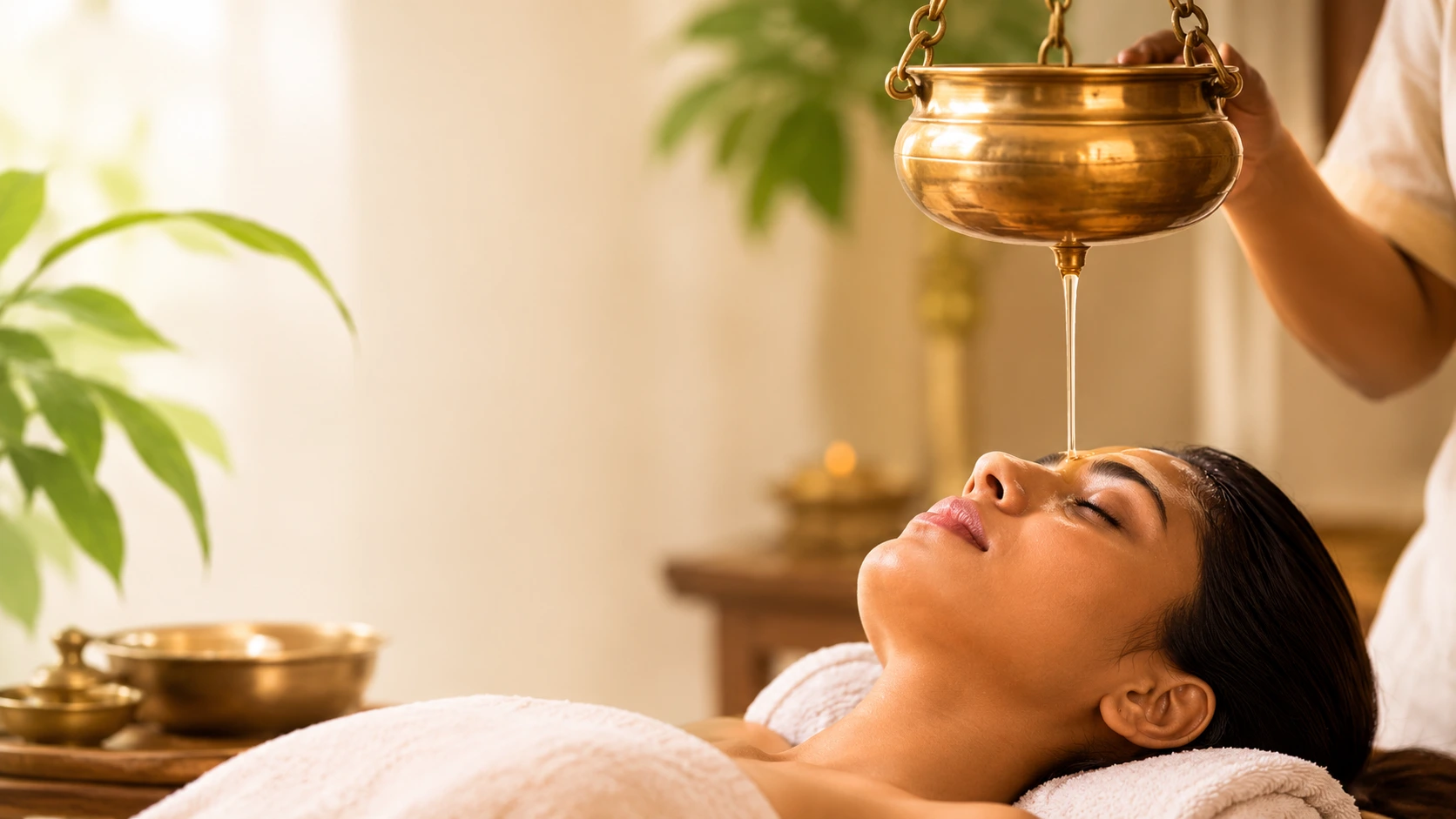
Shirodhara is a traditional Ayurvedic therapy whose name comes from two Sanskrit words: shiro, meaning head, and dhara, meaning flow. Together they describe the treatment itself — a continuous stream of liquid poured gently over the forehead while you rest comfortably on a treatment table.
Medicated herbal oils are most commonly used, although other liquids may be selected according to traditional practice and individual needs. The oil is warmed to a comfortable temperature and poured in a slow, steady rhythm from a specialised vessel suspended above the forehead.
The combination of gentle warmth, rhythmic flow and a quiet treatment room creates a sensory experience intended to encourage relaxation. In Ayurveda, Shirodhara is traditionally associated with calming the mind and supporting balance within the body. Today, many people explore it as part of a wider wellness routine that includes restorative therapies, meditation, healthy sleep habits and mindful living.
The Ayurvedic View: Doshas, Balance and Personalised Care
Ayurveda understands well-being through the relationship between body, mind, lifestyle and environment. Within this traditional framework, the three doshas — Vata, Pitta and Kapha — are used to describe individual constitutions and patterns of balance.
Shirodhara is traditionally understood to have a particularly calming effect on Vata, the dosha associated with movement and the nervous system, and on Pitta, the dosha linked to heat and intensity. An excess of either can show up as restlessness, irritability, mental fatigue or disturbed sleep, and the therapy is often chosen with these patterns in mind.
The treatment is not the same for everyone. The oil selected, the duration of the session and any wider wellness recommendations may vary according to the practitioner's assessment and your individual circumstances. This personalisation is one of Ayurveda's defining principles.
These concepts belong to the traditional Ayurvedic system and should not be confused with established biomedical explanations. Shirodhara is best understood as a complementary wellness practice rather than a proven treatment for a specific medical condition.
Benefits of Shirodhara: What It May Support
Shirodhara is best known for encouraging a state of calm, but its benefits are usually described in terms of relaxation and routine rather than medical outcomes.
Deep relaxation. Everyday responsibilities can leave you mentally overwhelmed, particularly when there is little opportunity to step away from work and screens. A quiet treatment environment offers a dedicated period in which to slow down, and many guests find the rhythmic flow of warm oil deeply soothing.
A calmer, quieter mind. The steady rhythm of the pour gives the senses something gentle to rest on. Guests often describe the experience as meditative — a rare hour in which there is nothing to do but receive.
Support for a restful sleep routine. Ayurveda places considerable emphasis on daily rhythms and appropriate rest. Calming therapies such as Shirodhara are traditionally incorporated into a broader approach to relaxation, alongside consistent sleep and wake times and reduced stimulation before bed.
A reset for the nervous system. Time away from notifications, a peaceful atmosphere and personalised care can help you step out of your usual routine and make space for yourself.
It is important to be realistic. Relaxation may not resolve every source of stress, and scientific evidence that Shirodhara independently improves sleep or treats insomnia remains limited. Its value lies in creating regular opportunities to unwind as part of a balanced lifestyle.
What Happens During a Shirodhara Treatment?
Understanding the process can help first-time guests feel more comfortable before experiencing Shirodhara. A session generally follows four stages.
1. A personalised consultation. Before the session, the practitioner discusses your preferences and relevant health considerations. This helps determine whether the treatment is suitable and which oil or preparation may be appropriate.
2. Preparing for the treatment. You are invited to lie comfortably on a specialised treatment table. The practitioner prepares the equipment and the selected liquid, ensuring the temperature is appropriate for safe application. A light head and shoulder massage may be included first.
3. The gentle, continuous flow. Warm oil is poured in a controlled stream over the forehead. The practitioner monitors the flow, the temperature and your comfort throughout the session. Many guests drift into a deeply relaxed, almost meditative state.
4. Time to rest afterwards. Once the treatment is complete, you may be given time to rest before returning to your usual activities. Your practitioner can explain any recommended aftercare, such as avoiding cold exposure or washing your hair at a particular time.
The exact procedure and duration vary between practitioners and treatment plans, so it is worth confirming the session length and preparation requirements with the treatment centre before booking.
How Long Does Shirodhara Take — and How Often Should You Have It?
A single Shirodhara session typically lasts between 30 and 60 minutes, with the pouring itself usually accounting for 30 to 45 minutes. First sessions sometimes run slightly shorter while you become accustomed to the sensation.
How often you have the treatment depends on your goals and your practitioner's assessment. In a retreat setting, Shirodhara is often offered daily or every other day as part of a structured programme. In classical Ayurvedic practice, it may form part of a longer course of treatments, traditionally seven, fourteen or twenty-one days, depending on the individual.
A single session can feel deeply restorative, but the cumulative effect of several sessions — combined with a supportive routine, nourishing food and adequate rest — is usually what guests value most. If you are visiting for only a few days, ask whether a short course can be arranged around your schedule.
Shirodhara vs Other Ayurvedic Therapies
Shirodhara belongs to a family of Ayurvedic therapies that use a continuous flow of liquid. Understanding how they differ can help you choose the right treatment.
Shirodhara pours warm oil over the forehead only, and is chosen primarily for its calming, grounding effect on the mind and nervous system.
Abhyanga is a full-body warm oil massage, traditionally used to nourish the tissues, support circulation and settle Vata. It is often combined with Shirodhara in a single session.
Ksheeradhara uses warm, herb-infused milk instead of oil and is traditionally chosen for its cooling, nourishing qualities — particularly useful in hot weather or when Pitta is aggravated.
Takradhara uses medicated buttermilk and is traditionally associated with cooling and soothing the skin and mind.
Kashaya Dhara uses a warm herbal decoction, often selected for muscular stiffness, pain or inflammatory patterns rather than relaxation alone.
Your practitioner will recommend the most suitable option after assessing your constitution and current state of balance. There is no single best therapy — only the one that fits your needs.
Who Should Avoid Shirodhara? Safety and Suitability
Shirodhara is generally considered a gentle therapy, but it is not suitable for everyone without appropriate advice. Before booking, inform your practitioner about any relevant medical conditions, allergies, scalp or skin concerns, and any recent head, neck or eye procedures.
Pregnancy and certain health conditions may require modifications or a different therapy altogether, so seek appropriate professional advice first. If you have a history of migraine, vertigo or sensitivity to oil on the skin, mention this during your consultation so the practitioner can adapt the treatment.
Shirodhara should be administered by a trained practitioner who has assessed your needs. It is a complementary wellness practice and should not replace appropriate medical care for persistent stress, anxiety, sleep disorders, headaches or other health concerns.
If you are experiencing severe or worsening symptoms, seek advice from a qualified healthcare professional. A balanced routine combines suitable complementary therapies with regular sleep, physical activity, nourishing food and medical care when needed.
Frequently Asked Questions About Shirodhara
How long is a Shirodhara session? Most sessions last 30 to 60 minutes, including consultation, preparation and rest afterwards. The pouring itself is usually 30 to 45 minutes.
What does Shirodhara feel like? Most people describe gentle warmth and a steady, rhythmic sensation across the forehead. The environment is quiet and dimly lit, and many guests become deeply relaxed or fall asleep.
Do I need to prepare before a session? Come with clean, dry hair and avoid heavy meals immediately beforehand. Your practitioner will confirm any specific requirements, including whether you should bring a change of clothes.
Is Shirodhara safe? It is generally gentle when performed by a trained practitioner after a consultation. Inform them of medical conditions, allergies, scalp concerns, pregnancy or recent head and eye procedures.
Can Shirodhara cure insomnia or anxiety? No. It is a relaxation-focused wellness practice, not a medical treatment. Scientific evidence for specific clinical effects is limited, and persistent symptoms should be assessed by a healthcare professional.
Shirodhara at Ayurdi Ayurveda: A Retreat Experience
The environment around us shapes how easily we step away from everyday demands. Natural surroundings, a quieter daily rhythm and time away from constant notifications create opportunities to rest and reconnect. A wellness retreat offers the chance to experience these changes more fully than an ordinary day allows.
At Ayurdi Ayurveda, the peaceful surroundings of Sri Lanka's southern coast complement the retreat experience. Shirodhara can be one element of a personalised programme that may also include Abhyanga, appropriate dietary guidance, meditation, yoga, relaxation practices and other traditional therapies.
Rather than offering treatments in isolation, our practitioners consider your constitution, lifestyle, general well-being and goals when recommending a plan. The intention is to help you explore suitable therapies while making time for rest, mindful routines and a slower pace of living.
Sometimes, making room for rest begins with changing your surroundings — and allowing yourself time to slow down.
Well-being does not always begin with dramatic changes. Sometimes it starts with a quieter moment, a more mindful routine, or the decision to make time for genuine rest. Shirodhara offers a traditional Ayurvedic experience centred on gentle warmth, rhythmic flow and a peaceful environment — an opportunity to discover a different approach to relaxation and self-care. Curious whether Shirodhara is right for you? Reach out to our team to learn more about the treatment, its suitability for your needs, and how it can fit into a personalised retreat programme on Sri Lanka's southern coast.
Continue Reading

Panchakarma for Sleep and Stress: How Ayurveda's Deep-Cleansing Therapy Restores Restful Sleep and Calms the Nervous System
9 Min Read
Spa Massage vs Ayurvedic Therapy: What’s the Difference?
10 Min Read

Beat the Heat Naturally: Ksheeradhara & Ayurvedic Cooling Therapies for El Niño Heatwave Season
7 Min Read